


A German company opens a new branch in Poland. Twenty MacBooks are to be delivered there – configured, fully set up, with Polish keyboards and Polish power adapters. It sounds like a simple order. In practice, it involves questions about customs regulations, export regulations, battery transport rules and country-specific Apple SKUs that are easily underestimated.
This article explains what companies need to consider when procuring Apple hardware internationally – and what a structured process looks like.
1. Country-specific device variants
Apple sells its devices worldwide, but not in one universal version. Differences relevant to international delivery:
- Keyboard layout: A German QWERTZ MacBook can be used in the UK without any problems, but not intuitively in Poland or the Czech Republic. Apple offers dedicated keyboard variants for most European countries.
- Power adapter & plug: Within the EU, mains voltage (230 V) and plug type (Type F/CEE 7/4) are largely standardised – exceptions: the UK (Type G) and Switzerland (Type J). Deliveries there require country-specific power adapters.
- Operating system keyboard language: The installed macOS can be supplied in any language, independently of the keyboard layout – important for multilingual teams.
2. Customs and import regulations within the EU
Within the EU single market, shipping IT hardware generally does not require customs clearance. However, electronic devices are subject to VAT, and different VAT rates may apply depending on the country of delivery. For B2B deliveries within the EU, the reverse-charge procedure applies – the recipient owes the VAT in the destination country.
For deliveries to non-EU countries (Switzerland, Norway, the UK, etc.), a full customs declaration is required. Apple products generally fall under customs tariff numbers in the data processing equipment category (8471.xx). Switzerland abolished import duties on most electronic products in 2024; Norway levies 25% import VAT.
3. Lithium-ion batteries: dangerous goods regulations in transport
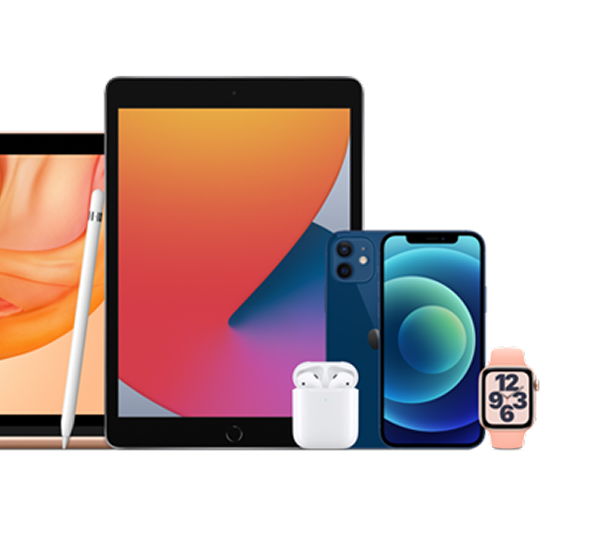
All Apple devices – MacBook, iPhone, iPad, AirPods – contain lithium-ion batteries and are therefore subject to dangerous goods regulations for shipping. Specifically, this means:
- Air freight (IATA DGR): Lithium-ion batteries in devices may only be shipped as dangerous goods with a special declaration. Stricter rules apply to quantities over 35 kg net weight or batteries over 100 Wh.
- Road transport (ADR): Small quantities (under 333 kg gross weight) can usually be shipped under the exemption rules, but must be correctly declared and packaged.
- Sea freight (IMDG): Separate rules for container loading – relevant for large orders.
Errors in dangerous goods declarations lead to shipping delays, customs holds or returns – and in some cases to fines. Denkform takes care of the correct declaration and labelling in accordance with IATA, ADR and IMDG for all international deliveries.
4. MDM enrolment for international deliveries
Devices delivered directly to employees abroad should be enrolled in Apple Business Manager and connected to the company’s MDM system before shipping – so that zero-touch deployment also works internationally. Denkform configures and enrols devices in its own workshop before delivery, regardless of which country the device is being delivered to.
5. Checklist: international Apple delivery
- Specify the correct keyboard layout for the destination country
- Check the country-specific power adapter (especially UK, Switzerland)
- Configure the operating system language/region
- ABM enrolment and MDM configuration before shipping
- Clarify customs requirements for the destination country (EU vs. third country)
- Ensure the dangerous goods declaration for lithium-ion batteries
- Prepare delivery documents for customs clearance
Denkform delivers configured Apple hardware to 36 countries – with everything that goes with it. Get in touch if you are planning an international rollout.